Why Not Results – Podcast Studio in Phoenix

How to Research Leads Before a Sales Call

Before a sales call, your team needs more than a raw lead list. A name, phone number, website, or business category may help you identify who to call, but it does not give the salesperson enough context to have a strong conversation.

The best sales conversations start with simple research. When your team reviews a lead’s website, blog, social media activity, follower counts, posting frequency, and CRM notes before calling, the outreach becomes more informed and more useful.

Quick Answer

To research leads before a sales call, review the company website, services, blog activity, social media profiles, reviews, follower counts, posting frequency, CRM notes, and obvious digital marketing gaps. A simple lead research checklist helps sales teams personalize the conversation, identify the right pain points, and avoid making generic cold calls.

Why Raw Leads Are Not Enough

A raw lead list gives your sales team names, phone numbers, websites, and maybe a few basic details. That is useful, but it is not enough to create a strong sales conversation.

Before a salesperson calls, they need context. They need to know whether the business looks active online, whether its website is current, whether it posts on social media, and whether there are obvious gaps in its digital marketing.

That research turns a cold call into a more informed conversation.

Sales team researching leads before a sales call using a digital lead research checklist

A Lead List Gives You Contact Information, Not Context

A lead list can tell your sales team who to contact, but it usually does not explain what is happening inside the business’s marketing.

For example, a lead list may include a company name and website, but it may not tell you whether the website is outdated, whether the blog is inactive, whether social media has been abandoned, or whether the company is missing key calls to action.

That missing context matters.

Better Research Creates Better Sales Conversations

When a salesperson understands the lead before calling, the conversation can become more specific.

Instead of making a generic pitch, the caller can reference real observations, such as an inactive blog, inconsistent social posting, missing video content, weak calls to action, or a lack of recent updates.

This makes the outreach feel more relevant and less random.

What to Check Before a Sales Call

Before a sales call, your team should review the lead’s digital presence. This does not need to be complicated. A simple checklist can help your team quickly understand how the business shows up online.

The most important areas to review are the company website, blog activity, social media channels, follower counts, last post dates, posting frequency, and overall content quality.

Review the Company Website

Start with the company website. Look at whether it feels modern, clear, and active. A strong website may show that the business already values digital marketing. A weak or outdated website may show an opportunity for improvement. Check whether the website includes:
  • Clear services
  • Strong calls to action
  • Contact information
  • Reviews or testimonials
  • Forms or booking options
  • Chat features
  • Links to social media
  • Updated branding
  • Mobile-friendly design
  • Helpful content for customers
A website can quickly show whether the company is investing in its online presence or falling behind.
Lead research checklist for sales teams before calling prospects

Check Blog Activity

A blog can be a strong signal. If a business is posting blogs consistently, it may already understand the value of search visibility and content marketing. If the blog exists but has not been updated in years, that may be a useful sales conversation point. It shows that the business started building content but may not have stayed consistent. When reviewing blog activity, look for:
  • The most recent publish date
  • How often posts are published
  • Whether topics are useful for customers
  • Whether posts are optimized for search
  • Whether the blog supports the company’s services
  • Whether the content feels current or outdated
A blog does not need to be perfect to be useful. It just needs to show whether the business has a content system or a content gap.

Review Social Media Channels

Next, review the company’s social media presence. Depending on the business, this may include Facebook, Instagram, YouTube, TikTok, X, LinkedIn, Pinterest, and Yelp.

The goal is not just to see whether the profile exists. The goal is to see whether the business is actually active.

Look at whether the profiles are complete, branded, current, and connected to the company’s website. Also check whether the posts match the business, audience, and services.

Capture Follower Counts and Posting Frequency

For each platform, capture simple details that help the salesperson understand the business quickly. Useful details include:
  • Does the company use the platform?
  • How often does it post?
  • When was the last post?
  • How many followers or subscribers does it have?
  • What is the overall quality rating?
  • Are posts consistent with the company’s services?
  • Are videos, photos, and captions strong?
  • Are there clear calls to action?
  • Are customers engaging with the content?
  • Is the platform active or abandoned?
These details can become useful talking points during the sales call.

Lead Research Checklist Before a Sales Call

Use this simple checklist before calling a new lead. The goal is not to spend hours researching. The goal is to find enough useful information to make the first conversation more relevant, personal, and productive.
Research Area What to Check Sales Call Use
Website Services, location, design quality, mobile experience, and calls to action Identify whether their online presence supports sales and lead generation
Blog Recent posts, topic quality, posting consistency, and search relevance Find content gaps and opportunities for better authority
Facebook Posting frequency, engagement, visuals, and follower count Understand how active the business is with its audience
Instagram Visual quality, recent posts, Reels, captions, and consistency Evaluate brand presentation and content quality
YouTube Videos, Shorts, subscribers, posting dates, and topic focus Identify video marketing opportunities
Reviews Yelp, Google reviews, review count, rating, and recent feedback Spot reputation strengths or weaknesses
CRM Notes Past conversations, lead source, pain points, objections, and next steps Avoid repeating questions and personalize the call
Main Opportunity The biggest visible marketing or sales gap Create a stronger opening question or recommendation

How to Rate a Lead’s Digital Presence

A simple 1 to 5 rating system can help keep lead research consistent. The rating should be based on the look, activity, consistency, content quality, and usefulness of the lead’s digital presence. Use this simple rating system:

  • 1: Very weak or inactive presence
  • 2: Some presence, but poor quality or outdated
  • 3: Average presence with room for improvement
  • 4: Strong presence, but still has gaps
  • 5: Very strong, active, and professional presence

Use Ratings to Make CRM Notes Easier to Scan

Digital marketing review process for researching business leads

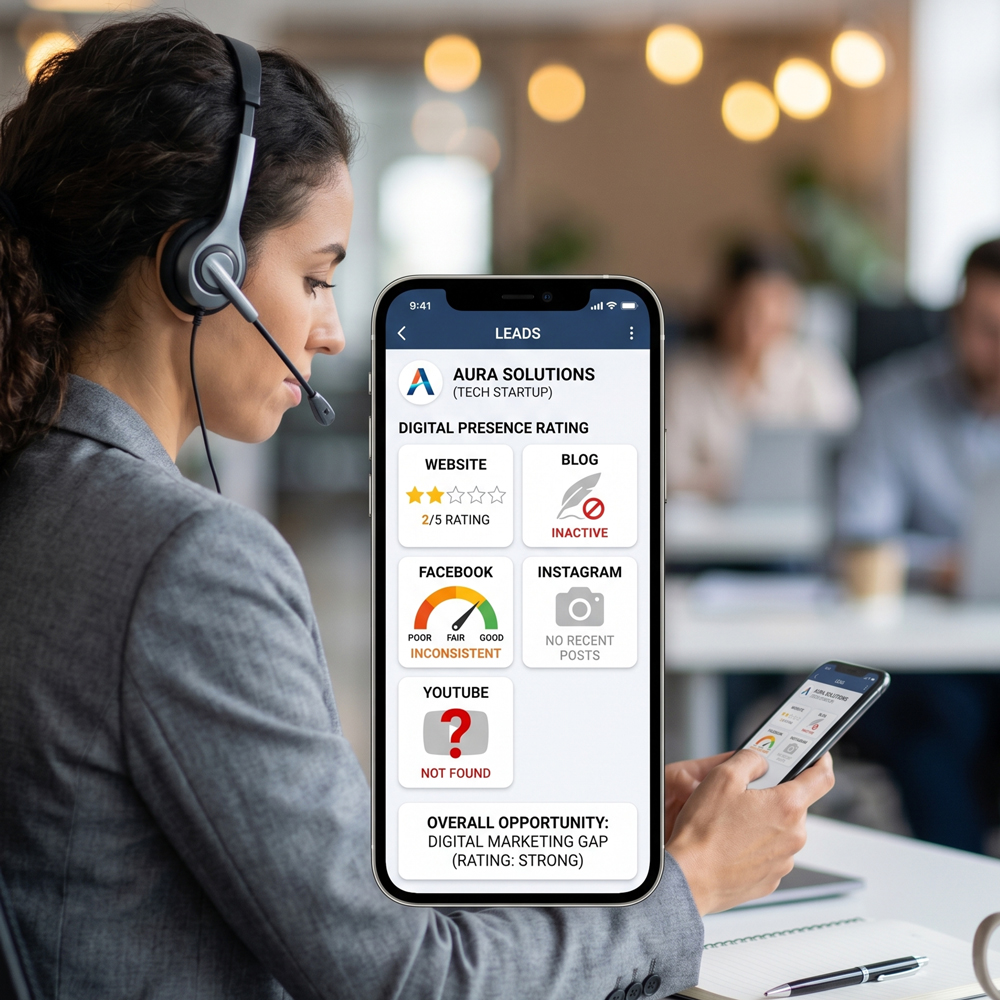
A rating system helps the sales team understand the lead quickly. Instead of reading a long paragraph before every call, the salesperson can scan a few scores and immediately understand where the opportunity may be.

For example:

Website: 2 out of 5
Blog: Inactive
Facebook: Active but inconsistent
Instagram: No recent posts
YouTube: Not found
Overall Opportunity: Strong digital marketing gap

This gives the caller context without slowing them down.

Look for Gaps That Can Start a Conversation

Salesperson reviewing company website and social media before a call

A lead’s digital presence may reveal helpful sales opportunities.

For example, a business may have a strong website but inactive social media. Another business may post regularly but have poor calls to action. Another may have a blog, but the last post may be several years old.

These gaps can help the salesperson start a more relevant conversation.

Why Simple CRM Notes Matter

The best CRM notes are not long. They are clear.

A salesperson should be able to open a lead and quickly understand the most important details. If the notes are too messy, too long, or too hard to scan, they slow the caller down.

A clean note format can include the website rating, blog status, Facebook details, Instagram details, YouTube details, Yelp details, and any obvious marketing gaps.

CRM Notes Should Help the Caller Move Faster

CRM notes should make the sales process easier, not harder. A good note should help the salesperson quickly answer:
  • What does this business do?
  • Does the website look current?
  • Is the company active on social media?
  • Are there obvious marketing gaps?
  • What should the caller mention first?
  • Is this lead a strong opportunity?
The goal is to give the salesperson a fast snapshot before the call.

Keep the Notes Short, Clear, and Useful

Long notes can be hard to use during outreach. Short notes with consistent formatting are easier to scan. A simple CRM note may include:
  • Website rating
  • Blog status
  • Facebook status
  • Instagram status
  • YouTube status
  • Yelp or review presence
  • Last post date
  • Posting frequency
  • Main marketing gap
  • Suggested talking point
This keeps the research organized and easy to use.

AI Can Help Organize Lead Information

AI can support the lead research process by helping clean lists, organize notes, summarize findings, and create a repeatable structure for CRM entries.

For example, AI can help format lead research into categories like website, blog, social media, reviews, and marketing gaps.

This can save time and help the sales team work more consistently.

Human Review Protects Accuracy

AI should not be the only step in the process.

A human reviewer should confirm that the website belongs to the correct business, the social media profiles are accurate, the activity is current, and the CRM notes are useful.

This helps prevent bad data from reaching the salesperson.

To start building a content system for your business, contact Mario Lizarraga and visit Whynot Results online.

Website: https://whynotresults.com/
Phone: +1-602-851-4104
Contact: Mario Lizarraga

Where AI Fits Into Lead Research

AI can help organize and scrub lead lists, but human review is still important.

AI may miss context, confuse similar business names, or pull information from the wrong profile. A person can verify whether the website is real, whether the social profiles match the company, and whether the notes are useful for sales.

The best process combines AI speed with human judgment.

Want a Better Lead Research System?

Raw lead lists are not enough. If your sales team needs a cleaner way to research leads, review digital presence, organize CRM notes, and prepare stronger sales conversations, Why Not Results can help build a repeatable system.

Book a strategy call with Why Not Results and turn your lead research process into better sales conversations.

Book a Strategy Call

If your team needs help building a stronger marketing and sales system, explore our digital marketing services.

For companies that want to turn one piece of content into multiple sales and marketing assets, learn more about our content repurposing services.

If your business needs a stronger local presence, review our organic growth and digital presence support.

Ready to improve your lead research and sales preparation process? Contact Why Not Results.

Common Lead Research Mistakes

Lead research should make the sales call easier, not more complicated. Many teams either skip research completely or spend too much time collecting information that does not help the conversation.

Only Checking the Company Website

A website is important, but it is only one part of the picture. Sales teams should also review social media, reviews, content activity, and CRM notes before calling.

Calling Without a Clear Talking Point

The goal of lead research is to create a better conversation. Before calling, the salesperson should know at least one specific observation, opportunity, or question related to the lead’s business.

Ignoring Recent Activity

A company may have a website and social profiles, but the real question is whether those channels are active. Recent posts, updated blogs, and current reviews can reveal whether the business is investing in its digital presence.

Relying Only on AI

AI can speed up research, but human review is still important. A person should check whether the information is accurate, relevant, and useful before it is used in a sales conversation.

Frequently Asked Questions

Lead research is the process of reviewing a company’s website, content, social media, reviews, and online activity before contacting them.

CRM notes help the salesperson quickly understand the lead before outreach. Good notes can provide talking points, show possible pain points, and make follow-up easier.

Useful notes include website quality, blog activity, social media links, follower counts, last post dates, posting frequency, review presence, and an overall quality rating.

AI can help organize and scrub lead lists, but human review is still important to verify accuracy, check context, and make sure the information is useful for sales.

Use a simple 1 to 5 rating based on website quality, social media activity, posting consistency, follower count, content quality, and overall professionalism.

Lead research is the process of reviewing a company’s website, social media, reviews, content, CRM notes, and visible marketing activity before making a sales call. It helps the salesperson understand the business before starting the conversation.

LATEST EPISODES

SEO and Organic Social Media
05Mar

SEO and Organic Social Media

Confused by digital marketing? This guide breaks down SEO, paid search, organic social, and paid traffic. Learn when to use each channel and plan your budget.

Geofencing + AI Ad Tracking for Service Businesses (Podcast)
12Feb

Geofencing + AI Ad Tracking for Service Businesses (Podcast)

Learn how geofencing builds high-intent audiences and how AI + UTMs, GA4, and Search Console improve attribution, calls, and qualified leads.

Sales and Marketing Conversion
04Feb

Sales and Marketing Conversion

Comparing SEO, SEM, and DSP advertising shows distinct benefits for lead generation and marketing strategy, with each offering unique advantages in search engine optimization, paid search, and programmatic ad buying.…

SEO vs SEM vs DSP Advertising
18Dec

SEO vs SEM vs DSP Advertising

Comparing SEO, SEM, and DSP advertising shows distinct benefits for lead generation and marketing strategy, with each offering unique advantages in search engine optimization, paid search, and programmatic ad buying.…

YouTube Analytics and Audience Retention
15Dec

YouTube Analytics and Audience Retention

YouTube analytics and audience retention are key to understanding how viewers interact with your content. By measuring key moments and retention rates, you can improve viewer engagement and build a…

Social Media Analytics and Why Your Social Media Needs a Coach for Better Engagement
05Nov

Social Media Analytics and Why Your Social Media Needs a Coach for Better Engagement

Social media analytics and expert coaching are key to boosting your brand’s growth and engagement. Learn how professional social media coaches help you interpret data, refine strategies, and make well-informed…